Labradorite: The Gemstone That Comes Alive in the Light

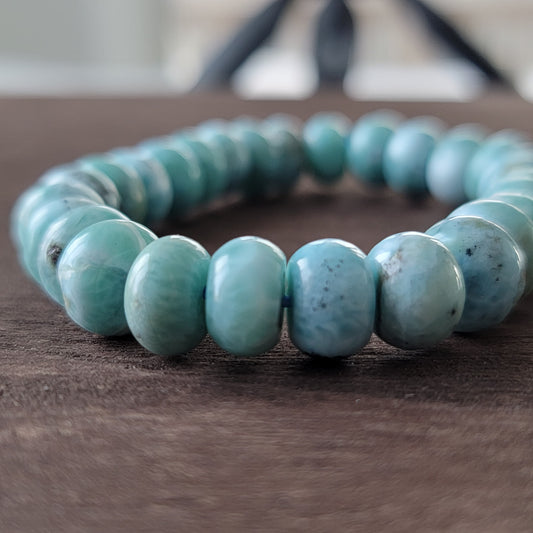
Labradorite is one of those gemstones that can look completely different from one piece to the next. At first glance, it may appear gray, charcoal, brownish, or almost black. Then you move it slightly in the light and suddenly a brilliant flash of blue, green, gold, or even purple appears across the surface.
That dramatic flash is what makes labradorite so fascinating—and why no two pieces ever seem quite the same.
Where Does Labradorite Come From?
Labradorite was first identified in Labrador, Canada, which is where it gets its name. Its type locality is Paul’s Island in Labrador, where the famous iridescent variety was first documented.
Today, gem-quality labradorite is found in several parts of the world. Some of the best-known sources include Canada, Madagascar, and Finland. Finland is particularly famous for a highly colorful variety known as spectrolite.
Labradorite also occurs in other locations, including parts of the United States. Oregon sunstone, for example, is a type of labradorite feldspar, although its copper-bearing material produces a very different appearance from the familiar blue-flashing labradorite used in jewelry.

Why Is Labradorite Blue?
This is where things get really interesting.
The blue you see in labradorite usually isn't a blue pigment within the stone. Instead, it is created by the way light interacts with incredibly thin layers inside the feldspar.
As labradorite cools, its internal structure can separate into extremely thin layers with slightly different chemical compositions. When light enters the stone and interacts with these layers, certain wavelengths of light are reflected back toward your eyes.
The thickness of these microscopic layers affects the color you see. Particular layer thicknesses can produce blue, while others can produce green, yellow, orange, red, or combinations of colors.
So that electric blue flash isn't a coating or something added to the stone. It's a natural optical effect created by the stone's microscopic internal structure.
What Makes Labradorite Flash?
The phenomenon is called labradorescence.
Unlike a gemstone that simply reflects light from its surface, labradorite can appear to light up from within. As you change the angle of the stone or the light source, different parts of those microscopic layers reflect light toward your eyes.
That's why a piece can look dark and quiet from one direction and suddenly explode with color when you tilt it.
The effect is highly directional, which is one reason labradorite is often cut as a cabochon. The cutter can orient the stone to show off its best flash.
And that little movement is part of the fun. A labradorite pendant can look blue in one moment, then gray, green, or almost black as it moves.
Why Do People Love Labradorite?
For many people, it's the element of surprise.
Labradorite doesn't necessarily announce itself from across the room. Its beauty often reveals itself when the light hits it just right. A relatively dark stone can suddenly show an intense electric-blue flash that wasn't visible a moment before.
It's also wonderfully individual. Some stones have broad areas of blue, while others have tiny flashes scattered across the surface. Some show blue and green together, while exceptional pieces can display several colors at once.
That makes labradorite especially appealing for jewelry. You're not just choosing a blue gemstone—you’re choosing a stone with its own particular pattern of color and light.
The flash isn't painted onto the surface or added during cutting. It's the result of the stone's own microscopic structure.
How to Care for Labradorite Jewelry
Labradorite is a feldspar with a Mohs hardness of roughly 6 to 6.5. It's durable enough for jewelry but can be scratched by harder materials.
For everyday care, remove labradorite jewelry before exercising, bathing, swimming, or doing activities where it could be knocked against a hard surface.
Clean it gently with lukewarm water, mild soap, and a soft cloth. Avoid harsh chemicals, abrasive cleaners, and sudden temperature changes. Ultrasonic and steam cleaning are best avoided with labradorite.
When storing labradorite, keep it separate from harder jewelry that could scratch its surface. A soft pouch or individual zip-top bag works well.
A Little Stone With a Lot of Personality
Maybe that's what makes labradorite so appealing. It isn't flashy all the time.
Most of the time, it can look like a beautiful gray or dark stone. Then the light moves, the angle changes, and there it is—that unmistakable flash of blue.
Labradorite is a great reminder that sometimes you have to move a gemstone around to see what it's really capable of.
And once you've seen that flash, it's pretty hard not to look for it every time.